Global Fights Kill Climate Action: Why 1.5°C Is at Risk
Geopolitical tensions are actively hindering global climate cooperation, despite scientists warning about the threat for decades.
Global Fights Kill Climate Action
Climate change is a well-documented threat. Scientists have warned us about it for decades. They’ve shown us alarming data. We know the planet warms fast. Yet, global climate cooperation seems to stall, or even regress.
This article explores the reasons for this stagnation. A common assumption is that climate change, as a universal threat, would unite nations. It should cut through political differences. However, the opposite has occurred. Geopolitical tensions are not just a distraction. They actively undermine climate efforts. They make the problem worse, not better.
Climate on the global stage
In 2015, the Paris Agreement set a global goal. Nations pledged to limit warming to well below 2°C, aiming for 1.5°C. This agreement brought nearly every country into a common cause. It was a big step for international cooperation.
But the world is complex. Major powers like the United States, China, and Russia have competing interests. The European Union finds its own way. Developing nations often feel the heaviest burdens and have the fewest resources. International bodies like the UNFCCC and IPCC guide us. Still, they rely on political will from individual states.
Before recent conflicts, there was a shaky agreement. Nations generally agreed to cut greenhouse gas emissions and adapt to climate impacts. This agreement often included financial support for poorer countries. That basic situation has now changed. Geopolitical competition for resources and influence has grown. Ideological differences have stiffened. This directly hit climate action.
Energy security vs. green future
Russia’s full-scale invasion of Ukraine in February 2022 was a turning point. Many observers expected this crisis to speed up the shift to renewable energy. It seemed logical. Nations would want to cut dependence on fossil fuels from unstable regions. This would push them towards cleaner, homegrown power.
The immediate aftermath, however, revealed a different trend. Many European nations, desperate for gas, reactivated coal plants. Germany, for instance, temporarily brought mothballed coal power stations back online. The United States increased its liquefied natural gas (LNG) exports to Europe. This boosted fossil fuel production short-term. The International Energy Agency (IEA) noted this global energy crisis response. It showed a temporary step back in some climate commitments.

Russia's full-scale invasion of Ukraine in February 2022 was a turning point that forced many European nations to temporarily reactivate coal plants for energy security, directly impeding climate change mitigation efforts. (Source: rferl.org)
Nations prioritized immediate energy security over long-term climate goals. This wasn’t just about gas. China controls a big share of rare earth minerals. These are important for electric vehicles and renewable energy technologies. Supply chain problems grew. The US Department of Energy showed this dependency. US-China tensions over these minerals make green shifts harder. Each nation wants secure access to these resources.
Lost money, stalled talks
Global military spending hit an all-time high of $2.24 trillion in 2022. This figure comes from the Stockholm International Peace Research Institute (SIPRI). This enormous sum could fund massive climate initiatives. It could support vulnerable communities.
But the impact goes beyond money. Geopolitical friction drains political capital. It diverts diplomatic attention. Trust between nations erodes. Discussions about shared climate solutions become harder. Richer nations promised $100 billion annually in climate finance to developing countries by 2020. They missed this goal. Oxfam reports keep showing this shortfall.
Geopolitical rivals find it nearly impossible to agree on joint climate projects. For example, US-China climate dialogue, an important way to talk, paused in August 2022. This followed then-House Speaker Nancy Pelosi’s visit to Taiwan. UN forums often become arenas for political sparring. They do less real climate work. Developing nations feel this sharply. They face severe climate impacts but lack promised funds for adaptation and mitigation.
Arctic melt, new fights
The Arctic Ocean warms four times faster than the global average. A 2022 Nature Climate Change study reported this. This warming clearly shows climate change’s direct effects. It creates new geopolitical flashpoints.
Climate change is not just slowed by conflict. It also creates new areas of competition. Melting ice opens new shipping routes. The Northern Sea Route offers a shorter passage between Asia and Europe. Russia, China, and Western nations eye these routes for economic and strategic advantages.
Access to untapped fossil fuel reserves also becomes a new prize. Critical minerals previously locked under ice become accessible. The Arctic Council, a forum for cooperation, has seen its work disrupted. The Ukraine conflict led many member states to pause their participation. This makes joint scientific research and environmental protection harder. Military buildup in the Arctic by nations like Russia and NATO members is increasing. This militarization raises the risk of conflict. It also makes shared environmental governance harder.
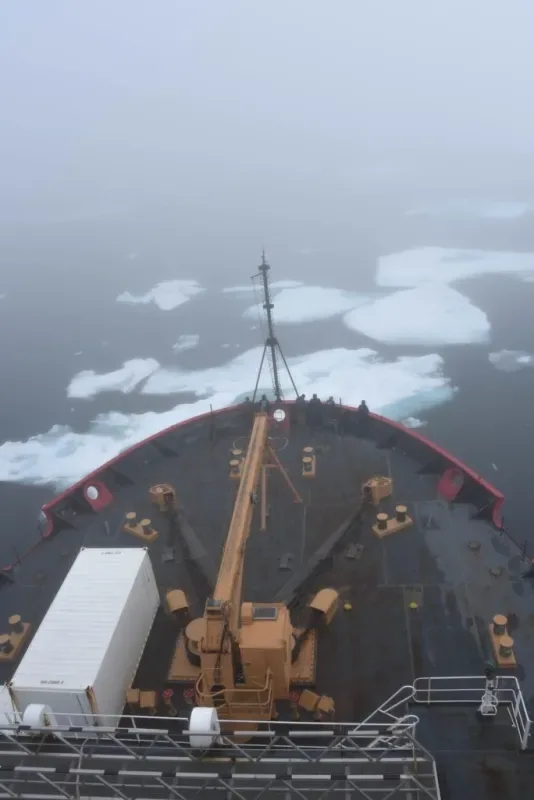
The Northern Sea Route, a shipping lane through the Arctic Ocean, is becoming increasingly navigable due to melting ice, offering a shorter passage between Asia and Europe. This climate-driven change has sparked intense geopolitical competition among nations like Russia, China, and Western powers vying for economic and strategic control. (Source: nsidc.org)
Rebuild trust, refocus
The COP28 summit in Dubai in late 2023 saw a big agreement. Nations established a Loss and Damage Fund. This fund aims to compensate vulnerable countries for climate impacts. It was a small but important step forward. It showed that progress is still possible.
Climate action needs a different kind of diplomacy. It requires finding common ground despite other big disagreements. It means separating climate efforts from broader geopolitical rivalries. This is a difficult task. Developing countries urgently need climate finance and technology transfer. Delivering on these promises helps rebuild trust. This is essential for any future cooperation.
Investing in renewable energy can reduce geopolitical dependencies. Europe’s rapid efforts to diversify energy sources away from Russia shows this. It creates more stable, domestic energy supplies. The path ahead is complex. We cannot ignore the strong link between conflict and climate. Doing so will only worsen both crises. Our future depends on handling these tensions. We must put our shared climate goals first.
FAQ
What is climate change mitigation? Climate change mitigation means cutting or stopping greenhouse gas emissions. This includes shifting to renewable energy, improving energy efficiency, and protecting forests. The goal is to make future climate change less severe.
How does geopolitical conflict stop climate action? Geopolitical conflict takes money, diplomatic focus, and political will away from climate work. It can also break supply chains for green technologies. It makes nations choose immediate energy security over long-term clean energy goals.
Are there any examples of climate action succeeding despite conflict? Despite ongoing conflicts, international climate negotiations still happen, like the annual COP summits. The establishment of the Loss and Damage Fund at COP28 is one recent example. It showed countries could still address climate justice, even with global tensions.
What are “critical minerals” in this context? Critical minerals are elements like lithium, cobalt, nickel, and rare earths. They are needed to make renewable energy technologies, electric vehicles, and batteries. Competition for secure access to these minerals is a growing global political issue.

The COP28 summit in Dubai in late 2023 was a landmark event where nations agreed to establish the Loss and Damage Fund, aiming to compensate vulnerable countries for climate impacts, showcasing a rare moment of progress amidst geopolitical challenges. (Source: pbs.org)
You might also like:
👉 US-China: $664B Trade Masks Zero-Sum Global Power Struggle
👉 Venus: Why 475°C Hell Holds Earth’s Climate Future
👉 Understanding Energy Independence: Security, Economy, Future