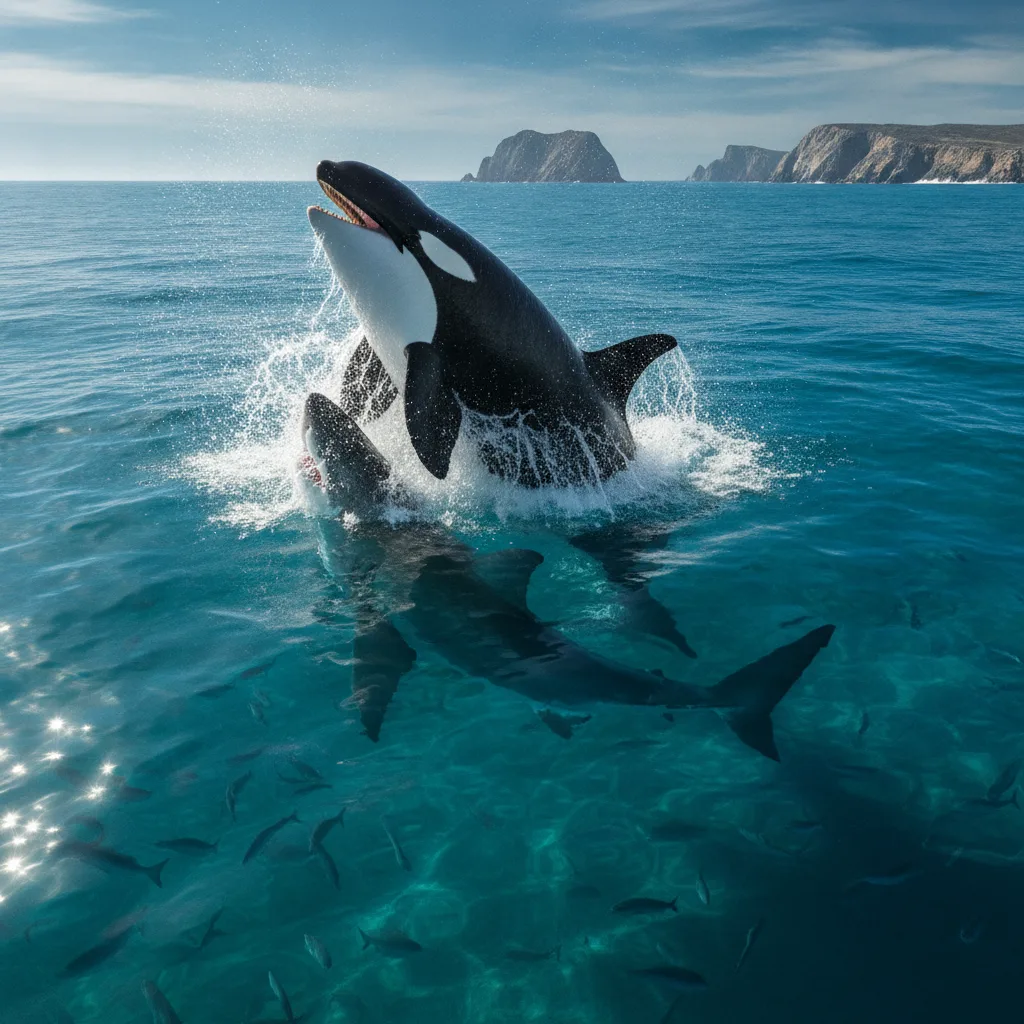
5 Great Whites Lost: Orcas' Surgical Strikes in South Africa
In May 2017, five Great White Shark carcasses washed ashore in South Africa, their livers surgically removed by orcas. Discover this ecological shift.
Imagine a predator so precise it removes only the liver from its prey. Orcas now hunt sharks this way. First documented in South Africa, this behavior marks a significant ecological shift. Scientists confirm they specifically target highly nutritious organs. Orcas use advanced hunting strategies to get them.
A new kind of shark hunter
In May 2017, five Great White Shark carcasses washed ashore near Gansbaai, South Africa. Each had precise, surgical-like wounds. Their livers were gone. Marine biologists confirmed orcas did it.
Dr. Alison Towner, a marine biologist with the Dyer Island Conservation Trust, led the first investigations. She documented these unique attacks. No one had seen orcas hunt large sharks like this before. It was a new chapter for ocean predators.
Two male orcas, nicknamed Port and Starboard, are the main culprits. Starboard has a collapsed dorsal fin, making him easy to spot. People often see these two off the Western Cape. Their presence usually means sharks disappear.
Meet the orca
Orcas, also called killer whales, rule every ocean. They’re part of the oceanic dolphin family, Delphinidae, scientifically known as Orcinus orca. These smart marine mammals hunt together in groups called pods.
A typical pod has a matriarch and her young. Pods can be small, just a few, or big, with dozens of orcas. They talk using complex sounds. Each pod often learns its own hunting tricks and favorite foods.
Orcas are incredibly strong. They hit speeds of 35 miles per hour. Their powerful tails deliver stunning blows. They also use echolocation to find their way and their prey. This sonar-like sense lets them ‘see’ inside animals.
Orcas eat many different things. They eat fish, seals, sea lions, and even other whales. Some groups stick to marine mammals. Others mostly eat fish. This flexible diet helps them live all over the world.
The liver hunt
Orcas go for the shark’s liver because it’s packed with nutrients. A shark’s liver can be a third of its body weight. It’s full of oil and fat. This gives orcas a huge energy boost. It’s a prized meal.
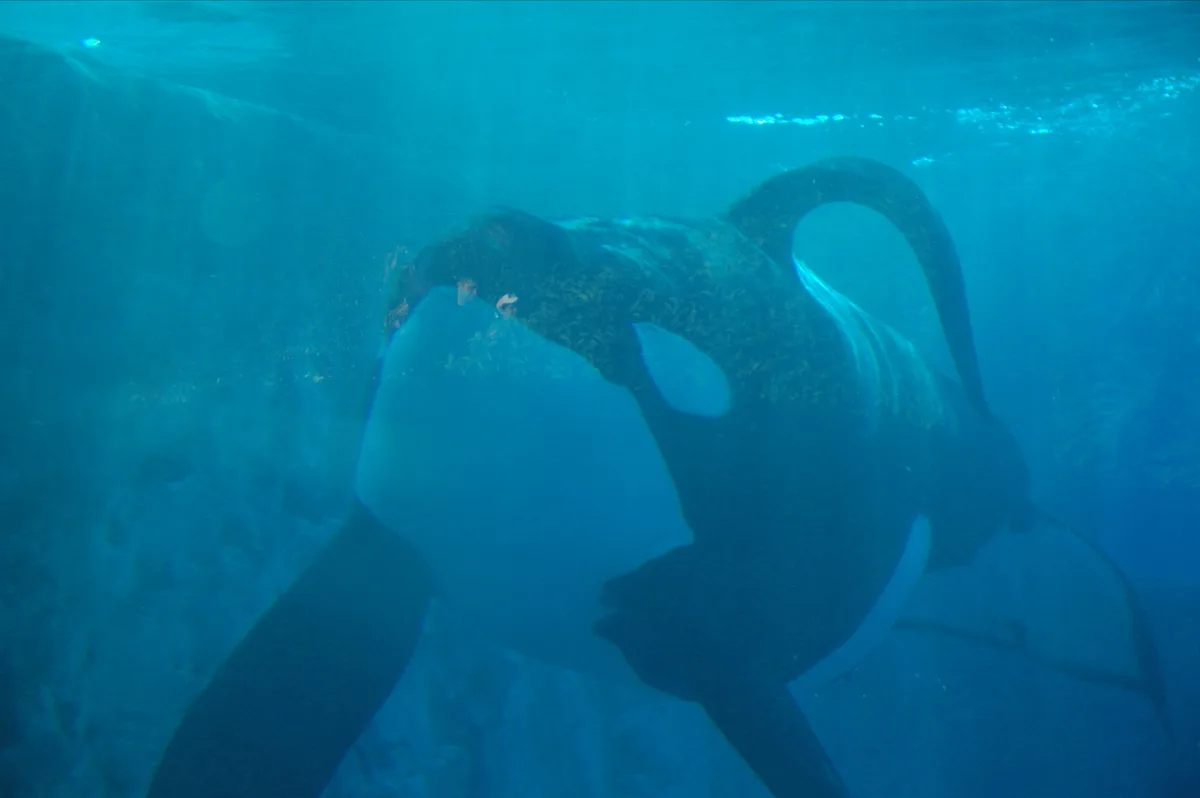
Starboard, one of the two male orcas nicknamed Port and Starboard, is easily identifiable by his distinctive collapsed dorsal fin. He is a key figure in the recently documented phenomenon of orcas specifically targeting and removing the livers of Great White Sharks off the coast of South Africa. (Source: en.wikipedia.org)
We’ve watched orcas use clever hunting methods. They often ram sharks to disable them. Their powerful bodies stun the sharks. One common trick is flipping the shark upside down. This causes tonic immobility, a temporary paralysis.
Once the shark is still, orcas attack precisely. They tear open the shark’s belly. They use their teeth to pull out the liver. Dr. Towner’s analysis always shows clean, distinct wounds. The rest of the shark is often left behind.
The African Journal of Marine Science published evidence of these attacks. Researchers linked orca sightings to dead sharks. The study confirmed how precisely the liver was removed. This shows incredibly refined hunting skills.
These aren’t random hunts. They’re planned, organized efforts. Orcas work as a team. They coordinate their movements. This lets them take down much bigger prey, like Great White Sharks.
Sharks on the run
Orca attacks have drastically changed shark populations. Great White Sharks largely abandoned their old hunting grounds. This includes False Bay and Gansbaai in South Africa. These spots were once world-famous for shark sightings.
Dr. Simon Elwen, a research associate at Stellenbosch University, points out the huge change. He said shark sightings dropped fast. This started soon after orcas began hunting more. Sharks actively avoid areas where orcas hunt.
Without Great White Sharks, a trophic cascade begins. Smaller Bronze Whaler Sharks filled the empty space. They now visit areas Great Whites once ruled. This changes the local food web. Chris Fallows of Apex Shark Expeditions saw this shift firsthand.
A 2022 study in the Ecological Society of America’s journal documented these shifts. Researchers tagged sharks and tracked their movements. They confirmed Great Whites left quickly and stayed away. The study blamed it directly on orcas. Such a big predator displacement is rare.
This ecosystem change can have long-term effects. It impacts other marine species. It also hurts local tourism. Shark cage diving, for instance, has suffered. Their main attraction moved away.
It’s not just South Africa
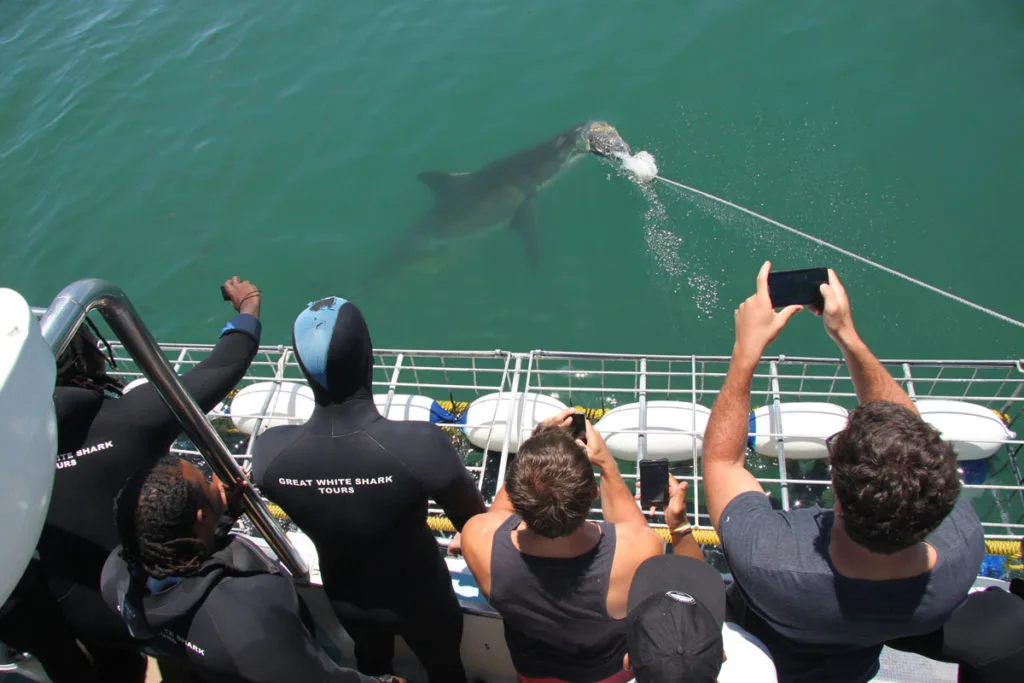
Once a thriving tourist attraction in places like False Bay and Gansbaai, South Africa, shark cage diving has suffered significantly as Great White Sharks, its primary draw, have abandoned their traditional hunting grounds due to increased orca predation. (Source: planetjanettravels.com)
Orcas don’t just attack sharks in South Africa. Similar incidents show up elsewhere. This points to a wider hunting pattern. Orcas adapt their hunting.
Off California, orcas have gone after different shark species. They’ve attacked Sevengill Sharks. These events show they like different prey. The basic strategy stays the same. Orcas want those nutrient-rich organs.
In Western Australia, people have seen orcas hunting Thresher Sharks. These events happen less often than in South Africa. Still, they show similar hunting skills. Orcas change their methods for local sharks.
The National Oceanic and Atmospheric Administration (NOAA) tracks orca behavior worldwide. They know orcas are opportunistic feeders. They also note how smart these animals are. Orcas learn and pass on hunting techniques within their pods. This lets new behaviors spread.
This global reach suggests it’s not isolated behavior. It might be a learned cultural trait. Some orca pods specialize in certain prey. Hunting sharks for their livers is becoming one of these specialties. It shows how versatile orcas are as predators.
What’s next for the oceans?
Orcas hunting sharks will keep changing ocean environments. Scientists expect more shifts in prey. This could create new ecological balances. No one knows the long-term effects yet.
Researchers will watch more closely. They’ll track orca movements and shark populations. They’ll use satellite tags and drone footage. We need to understand these interactions. It helps predict how ecosystems will change.
Conservation plans might need changes. Protecting vulnerable sharks gets harder. It’s not only human impact. Natural predation has a powerful role. This needs a full approach.
Future studies will look at how these changes affect other marine life. Missing top predators, like Great Whites, creates a ripple effect. This can impact seals or smaller fish. Marine biologists keep watching these changing relationships closely. But one thing is clear: the ocean’s food web is a dynamic, unpredictable place. Its biggest predators are still writing the rules.
FAQ
Why do orcas only eat the shark’s liver? The shark’s liver is super rich in fats and oils. It’s a dense, high-energy food source. This makes it a valuable, efficient meal for orcas.
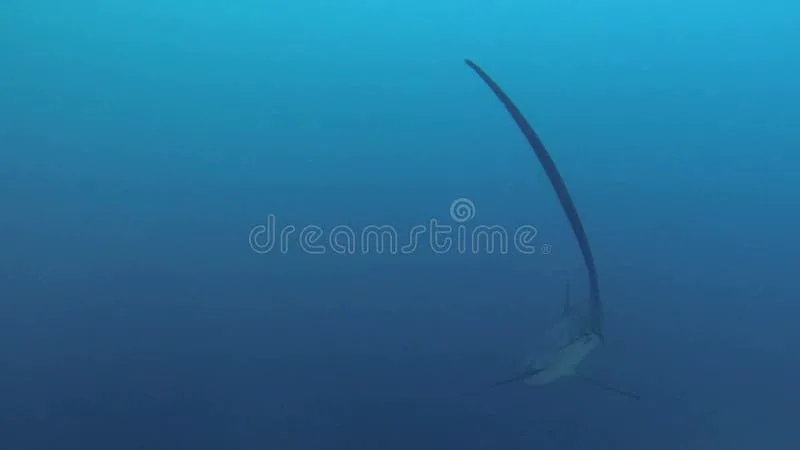
Thresher sharks are easily recognized by their exceptionally long, whip-like caudal fin, which can be as long as their body. Orcas have been observed hunting these distinctive sharks in Western Australia, showcasing their adaptable hunting strategies for local prey. (Source: dreamstime.com)
Are all orcas doing this? No, this hunting is a specialized skill. Only certain orca pods or individuals do it. Port and Starboard are famous for it in South Africa.
What types of sharks are targeted? Orcas target Great White, Sevengill, and Bronze Whaler Sharks. They adapt their prey based on what’s available. The common factor is the big, fatty liver.
Is this a new behavior for orcas? Orcas have always been top predators. But systematically pulling out shark livers is a recent observation. It became well-known with detailed reports starting in 2017.
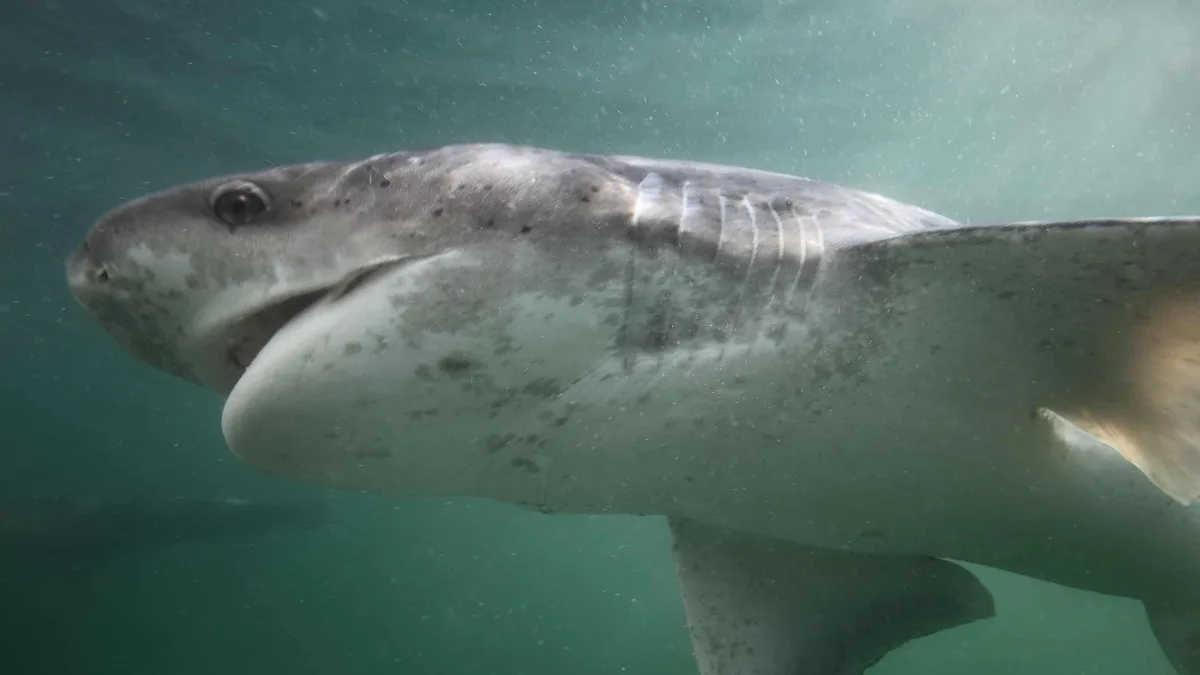
The Broadnose Sevengill Shark, an ancient species with seven gill slits (most sharks have five), is a common target for orcas like Port and Starboard due to its large, fatty liver, a rich energy source. (Source: a-z-animals.com)
You might also like:
👉 Unexplained Mysteries of Science: Cosmos, Quantum & Beyond
👉 Unveiling the World’s Most Baffling Natural Phenomena
👉 Super El Niño 2026 Predictions: Global Impact & What to Expect