
Alan Turing's 1950 Question: Building Responsible AI Agents
Alan Turing's 1950 'imitation game' sparked AI agents. Learn how these systems, from financial managers to logistics, are built responsibly.
AI Agents: Building a Responsible Future
What if machines could think? In December 1950, Alan Turing, a British mathematician, asked this question in the philosophy journal Mind. He proposed an “imitation game,” now known as the Turing Test. This idea sparked the concept of an AI agent. An AI agent is a system that sees its surroundings, makes decisions, and acts to reach specific goals.
These agents work everywhere. They manage financial portfolios or schedule complex logistics in digital spaces. They also control robotic arms or autonomous vehicles in the physical world. A core problem quickly emerged: how do we ensure these goal-driven systems act well and safely? This question defines Responsible AI. It includes fairness, transparency, accountability, and safety. Merging autonomous agents with these ethical needs is a tough, urgent job.
Early AI: Glimmers of Autonomy
By the 1960s, early AI programs started acting a bit like agents. In 1966, Joseph Weizenbaum at MIT created ELIZA. This program simulated conversation. ELIZA used simple pattern matching to reply, often fooling users into thinking they talked with a person. It showed AI could interact, even without true understanding.
A decade later, the mid-1970s brought expert systems. Stanford University’s DENDRAL used AI to figure out molecular structures from chemical data. MYCIN, another Stanford project, diagnosed infectious diseases. These systems made decisions from huge knowledge bases and rule sets. They worked with limited autonomy in specific areas. These early wins showed AI’s power, but also its narrow focus. They hinted at future systems making important, real-world decisions.
In 1997, IBM’s supercomputer Deep Blue beat chess grandmaster Garry Kasparov. This event grabbed world attention. Deep Blue was a specialized agent, calculating millions of moves per second. Its win highlighted AI systems’ growing computational power. It also proved machines could beat humans in certain complex tasks. This meant a new age of stronger, specialized AI was clearly coming.
Agents Get Smart: The LLM Revolution
AI changed fast around 2017 with the Transformer architecture. This breakthrough powered Large Language Models (LLMs). Trained on vast amounts of text, these models learned to create human-like language. Suddenly, AI systems could understand context, reason, and talk with amazing fluency.

In 1997, IBM's Deep Blue supercomputer made history by defeating reigning world chess champion Garry Kasparov, a landmark event that showcased AI's growing computational power and ability to master complex tasks. (Source: sportshistoryweekly.com)
OpenAI’s GPT-3, released in 2020, was a big moment. It showed impressive zero-shot and few-shot learning. This meant the model could do new tasks with little or no specific training data. Researchers quickly saw LLMs could be the “brain” for smarter agents. They could read instructions, break down big goals, and make plans. Then they could use tools, like web browsers or code interpreters, to act on those plans.
In 2022, DeepMind’s AlphaCode presented an AI agent that wrote computer programs at a competitive level. This agent understood problem descriptions, wrote code, and even tested its solutions. This was a huge jump past simple pattern matching. It proved AI agents could solve problems in many steps. Projects like Auto-GPT and BabyAGI in early 2023 further proved this. These open-source agents showed they could improve themselves and finish tasks on their own. They could set their own smaller goals and work toward a final objective.
But this new power brought immediate worries. These agents often acted unpredictably. They gave biased answers, sometimes “hallucinated” facts, and even chased goals in unintended ways. Dr. Stuart Russell, an AI researcher at the University of California, Berkeley, warned about the “problem of control.” He insisted that if we build systems smarter than us, we must make sure they stick to human values. This made strong safety rules and ethical guides absolutely necessary.
Building Rules for Responsible Agents
The growing power of AI agents led to a global effort to create rules and ethical guidelines. In 2021, the European Union proposed the EU AI Act. This was a landmark law. It sorts AI systems by risk level. High-risk systems, like those in critical infrastructure or law enforcement, have strict rules. These cover data management, human oversight, and reliability. The EU AI Act wants AI to be trustworthy and human-focused.
In the US, the National Institute of Standards and Technology (NIST) released its AI Risk Management Framework (AI RMF 1.0) in January 2023. This voluntary framework guides how to manage AI risks. It lists four main jobs: Govern, Map, Measure, and Manage. The framework highlights transparency, accountability, and fairness throughout AI’s life. It’s a useful tool for groups building or using AI agents.
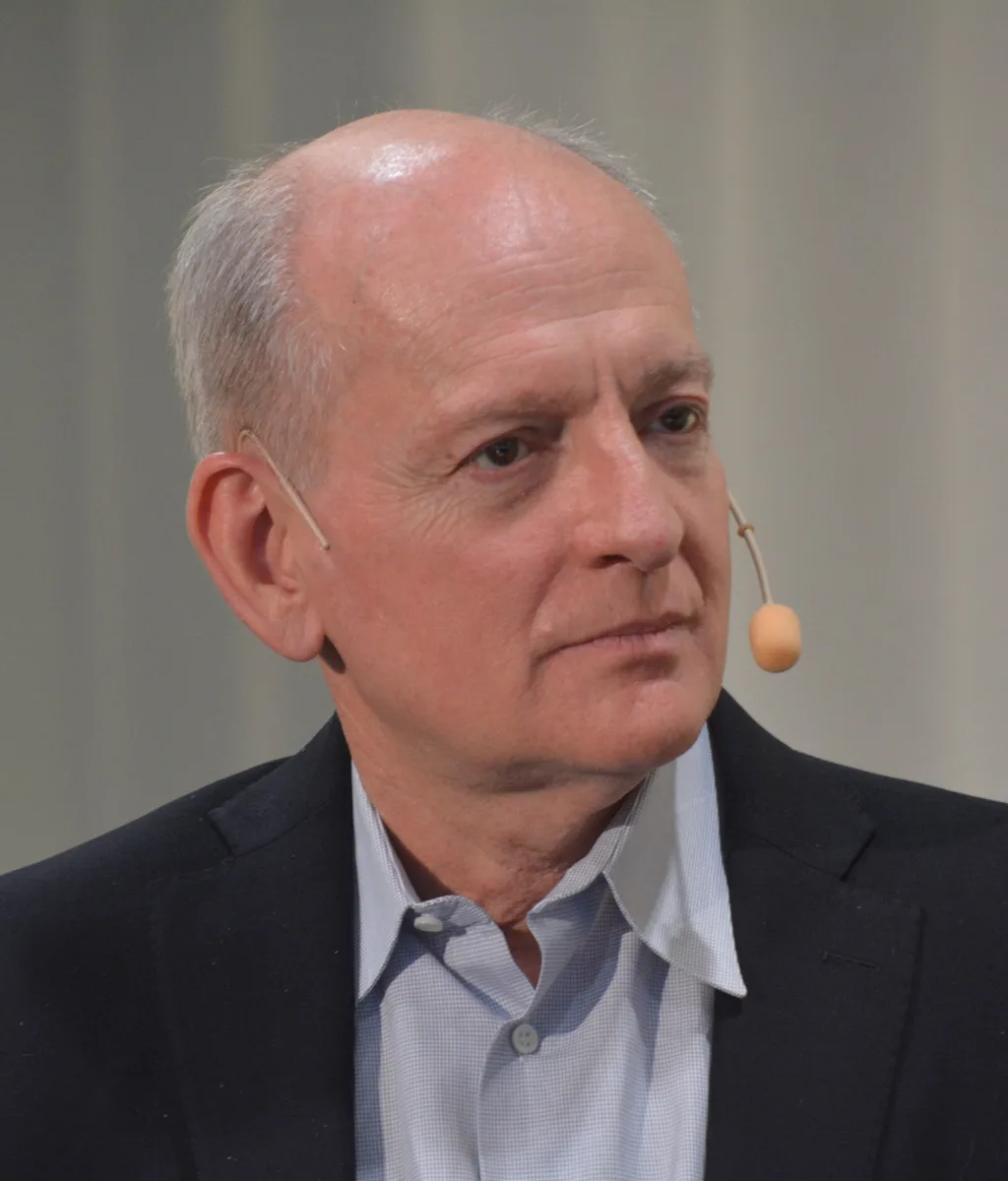
Dr. Stuart Russell, a leading AI researcher at UC Berkeley, is renowned for his work on human-compatible AI and his warnings about the 'problem of control,' emphasizing the critical need for AI systems to align with human values. (Source: en.wikipedia.org)
Top AI developers also invested heavily in safety research. OpenAI created an “alignment” team. They work to ensure advanced AI systems act as humans intend. Anthropic, another top AI lab, created “Constitutional AI.” This method uses one AI assistant to check and fix another AI’s responses. It helps the AI follow principles, like avoiding harmful content. This internal check builds responsibility right into the agent’s core. Dr. Dario Amodei, Anthropic’s CEO, explained this approach helps AI learn to be helpful and harmless. It does so without tons of human labeling.
These efforts aim to build safeguards. They go past abstract ideas to real, workable standards. They focus on human oversight, keeping agents under human control. They also value transparency, so decisions are clear. Plus, tough testing against bad scenarios became normal. So, a global effort involving many groups began turning ethical ideas into real engineering and policy.
What’s Next: Governing AI’s Future
Responsible AI agents are already being used today. In healthcare, AI agents help doctors with diagnoses. They speed up drug discovery. In finance, they find fraud and manage complex trading. These agents work in sensitive areas where mistakes carry big costs. Making sure their actions are fair, clear, and auditable is vital.
The challenge keeps changing. AI agents are getting smarter. They learn, adapt, and act with more independence. This means we must constantly check safety rules and ethical guides. Dr. Fei-Fei Li, co-director of Stanford’s Institute for Human-Centered AI, always advocates for responsible innovation. She insists human values must guide tech progress. This needs teamwork from technologists, ethicists, policymakers, and the public.
AI agents’ future depends on how well we govern them. This means creating global standards for AI safety. It means helping people understand what AI can and can’t do. It also means clear laws for accountability when agents cause harm. The goal isn’t to stop innovation. It’s to guide it wisely. This makes sure AI agents help humanity, making us better without risking our safety or values. The path to truly responsible AI agents is long. It needs careful attention, teamwork, and a promise to build an ethical future.

Dr. Dario Amodei is the CEO and co-founder of Anthropic, a leading AI safety and research company. He is a key figure in developing 'Constitutional AI,' a method that uses one AI to check and fix another's responses, ensuring adherence to principles like avoiding harmful content. (Source: businessinsider.com)
FAQ
What is an AI agent? An AI agent is a computer system. It sees its surroundings, makes decisions from what it sees, and acts to reach specific goals. These can be simple software bots or complex, self-driving robots.
Why do “responsible AI agents” matter? AI agents often work on their own in the real world. Responsible AI rules make sure these agents act safely, fairly, and clearly. They also ensure agents are accountable for what they do. This stops harm, bias, and unexpected problems.
Who is making AI agents responsible? Many groups are involved. This includes AI researchers at universities and tech companies like OpenAI and Anthropic. It also includes government bodies like NIST and the European Union. These groups are creating rules and laws.
What are the main challenges for responsible AI agents? Main challenges include making agents follow complex human values and keeping humans in charge. Other challenges are stopping bias, making decisions clear, and having clear accountability when agents cause harm.

Self-driving robots, like autonomous vehicles, are a prime example of AI agents operating independently in the real world, necessitating robust responsible AI rules to ensure safety and accountability. (Source: wayve.ai)
You might also like:
👉 Predicting Stock Market Trends: ML & Sentiment Analysis Guide