AI: The Super-Powered Intern Slicing Years Off Science
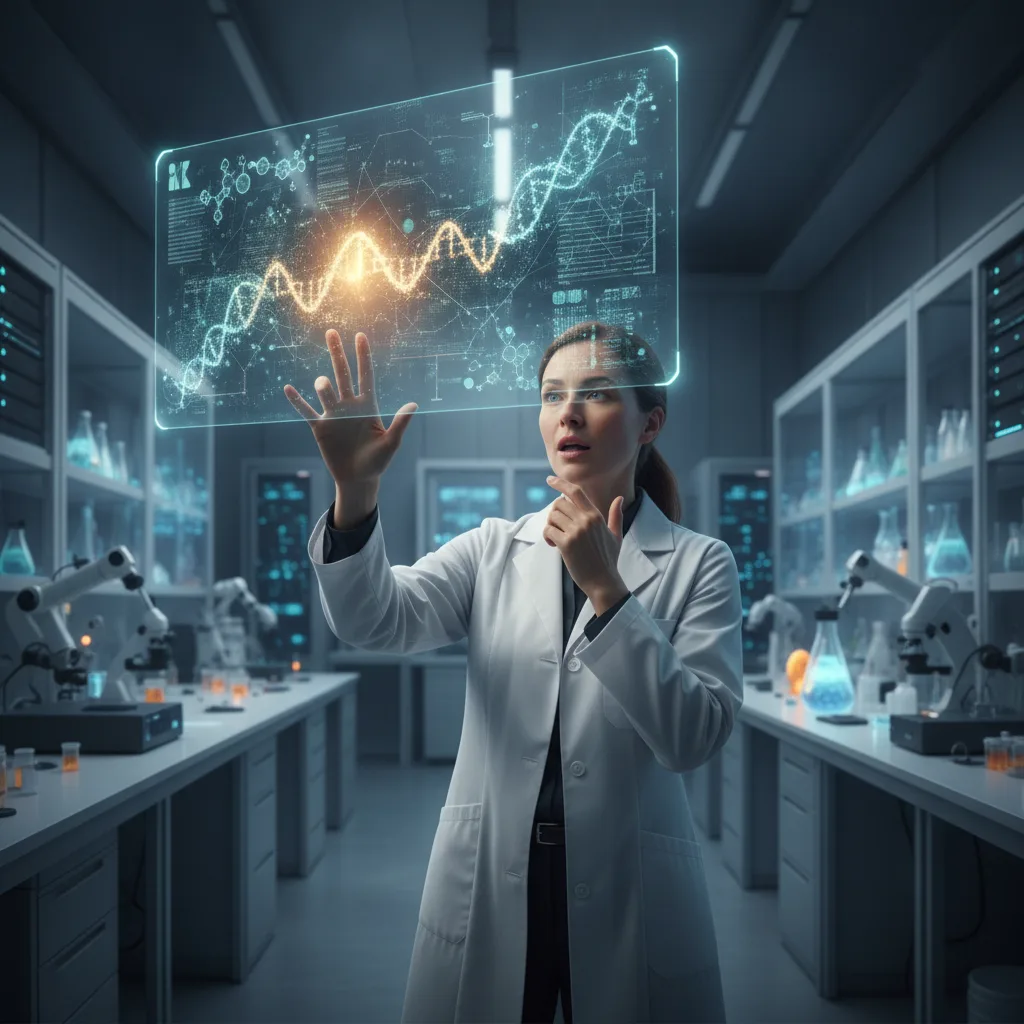
AI is fundamentally changing scientific discovery, acting as a powerful tool. It's not a genius, but a super-powered intern for data, speeding up processes that once took years, even decades.
AI speeds up scientific discovery
AI is fundamentally changing the process of scientific discovery. It is not just assisting scientists. We often imagine a human brain connecting ideas or running experiments. AI isn’t the genius, not yet. Instead, it acts as a powerful tool, similar to a super-powered intern or a microscope for data.
Science used to follow a predictable path: observe, hypothesize, experiment, collect data, analyze. This process took years, even decades, demanding huge human effort. Scientists often missed connections across fields because they focused on specific subfields. Today, no human can read all new scientific literature. Over 5 million new research papers appeared in 2023 alone, according to estimates by the National Science Foundation. This data overload stopped new discoveries.
AI sparks new discoveries
In 2020, DeepMind’s AlphaFold dramatically sped up protein structure prediction. This showed a major shift in scientific methods. AlphaFold uses a learning computer system, an AI modeled loosely on the human brain, to predict protein shapes. Proteins are life’s building blocks; their complex folding dictates their function. Knowing these shapes matters greatly for drug development and disease research.
Before AlphaFold, figuring out a protein’s structure took years of lab work. It used expensive, difficult techniques like X-ray crystallography. Dr. Demis Hassabis, CEO of DeepMind, said AlphaFold’s accuracy was “competitive with experimental methods.” This AI system processes huge amounts of genetic data and known protein structures. It learns how amino acid sequences fold into specific shapes. This lets scientists explore protein interactions much faster.
Think of it this way: a human might spend years trying to build a complex LEGO model by trial and error. AlphaFold, though, has seen millions of finished LEGO models and their instructions. Give it new pieces, and it predicts the final structure almost instantly. This doesn’t mean we don’t need humans. Scientists still design experiments and interpret AlphaFold’s predictions.
Faster materials and drug design
AI also changes how we search for new materials and medicines. Traditional materials science means synthesizing and testing countless compounds in a lab. This trial-and-error takes ages and costs a fortune. Now, researchers use AI to predict material properties before creating anything. This greatly narrows down candidates for testing.
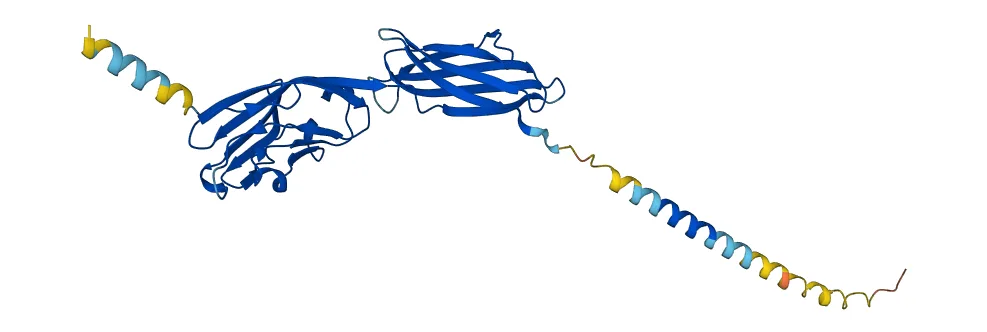
AlphaFold, developed by DeepMind, dramatically accelerated the prediction of complex protein structures, a process that previously took years of lab work using techniques like X-ray crystallography. Its accurate predictions are crucial for advancements in drug development and disease research. (Source: info.hsls.pitt.edu)
In 2022, a team from the University of California, Berkeley, used AI to find new battery materials. They focused on solid-state electrolytes, which offer safer, more efficient energy storage. Their AI system screened millions of potential inorganic compounds far faster than any human chemist. They found several promising candidates for next-generation batteries. This project showed how AI speeds up finding materials with specific properties.
Drug discovery follows a similar slow, expensive path. Finding a new drug, testing it, and getting it to market often takes over a decade. It costs billions of dollars, according to a 2018 study by Tufts Center for the Study of Drug Development. AI systems can analyze molecular structures. They predict how these will interact with biological targets, identifying potential drug candidates much faster. Insilico Medicine, a Hong Kong-based AI company, used its platform to find a new drug for idiopathic pulmonary fibrosis. This drug entered clinical trials in 2022, showing AI can dramatically shorten discovery times.
AI finds cosmic secrets
Astronomy and astrophysics also benefit from AI’s analytical power. Telescopes collect huge datasets from space. This is far too much for human scientists to sift through manually. AI algorithms are great at finding subtle patterns or anomalies in this flood of information. This includes spotting new celestial objects or faint signals.
NASA’s Kepler Space Telescope, for instance, generated terabytes of data searching for exoplanets. In 2018, Google AI worked with NASA to apply machine learning to this data. They used a type of learning computer system, an AI often used for image analysis, to sift through light curves. These curves show dips in a star’s brightness, meaning an orbiting planet. The AI system found two new exoplanets, Kepler-90i and Kepler-80g, which humans had missed. This proved AI could spot fainter, less obvious planetary transits.
Astronomers at the European Space Agency (ESA) also use AI to classify galaxies. A human eye can categorize thousands, but AI processes millions. It identifies different galaxy types—spirals or ellipticals—and even detects unusual shapes. This lets scientists study galaxy evolution on a massive scale. AI acts as an extra set of diligent, tireless eyes for astronomers.
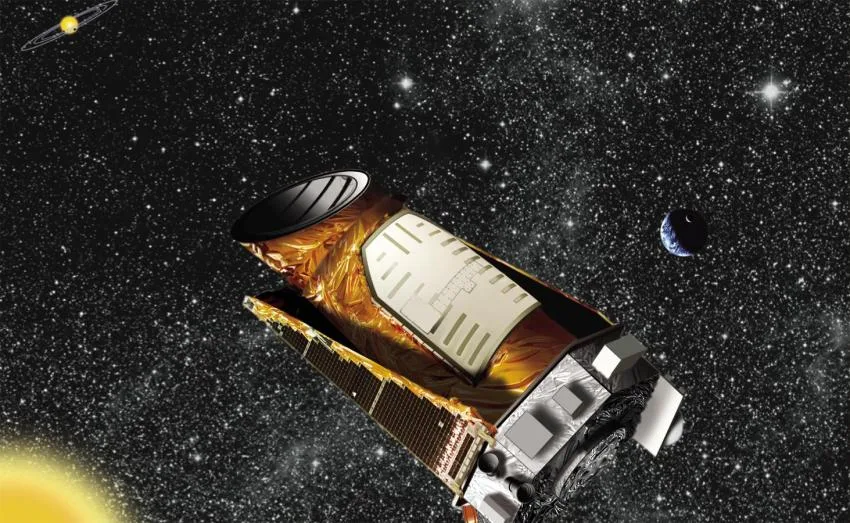
NASA's Kepler Space Telescope, launched in 2009, was instrumental in discovering thousands of exoplanets by detecting subtle dips in star brightness. Its vast datasets were later analyzed by AI, leading to the discovery of previously missed planets like Kepler-90i. (Source: ras.ac.uk)
Challenges and ethical questions
Despite its promise, AI in scientific discovery faces big challenges. One major problem is the issue of unclear reasoning. Many advanced AI models, especially complex learning computer systems, make decisions hard for humans to understand. We see the input and output, but not the internal reasoning. This lack of clarity can be a problem in medicine, where knowing why a drug works is as important as knowing that it works.
Data quality and bias also risk problems. AI systems learn from the data they get. If this data holds biases or inaccuracies, the AI will spread them. For instance, if drug discovery data mostly represents certain demographics, the AI might create drugs less effective for others. Diverse, high-quality datasets are essential. Dr. Kate Crawford, a leading AI researcher, often stresses the need to examine the data AI systems train on.
Also, setting up and training complex AI models needs huge computational resources. This can block smaller research institutions. Not everyone has access to powerful supercomputers and specialized AI talent. This could worsen existing inequalities in scientific research. Balancing access and fair participation remains a key discussion.
Humans and AI: a scientific partnership
Scientific discovery’s future will likely involve a close partnership between humans and AI. AI won’t replace human scientists; it will boost their abilities. Scientists will still be essential for asking questions, designing experiments, and interpreting AI’s findings. AI will handle data-heavy tasks, spot patterns, and create new hypotheses at speeds humans can’t match.
Large language models (LLMs), like OpenAI’s GPT series, for example, are starting to help with literature reviews. They can summarize thousands of papers and suggest new connections between different fields. This frees up human researchers to focus on creative problem-solving and experimental design. The goal is a close partnership where each partner brings unique strengths.
We’re entering an era where AI helps us explore scientific areas too complex or data-rich for humans alone. This means faster drug development, more sustainable materials, and deeper insights into the universe. In the next decade, AI will become an even more integrated part of science. This will surely lead to breakthroughs we can only imagine today.
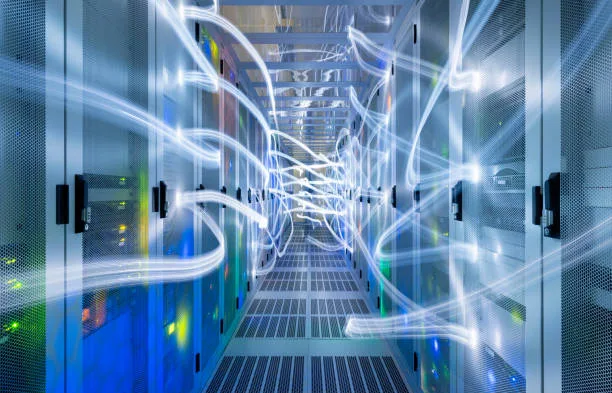
Supercomputers, like this one, are essential for training the complex AI models used in scientific discovery, but their immense computational demands can create significant barriers for smaller research institutions, exacerbating inequalities in scientific research. (Source: gettyimages.in)
You might also like:
👉 Predicting Stock Market Trends: ML & Sentiment Analysis Guide
👉 Unexplained Mysteries of Science: Cosmos, Quantum & Beyond