
2026: IMF Predicts 3.1% Growth, A World Splitting Apart
The 2026 global economic outlook reveals a 3.1% growth prediction from the IMF, yet a deep split is emerging. Learn how leaders navigate this bifurcated landscape.
The world splits: 2026 economic divide deepens
The International Monetary Fund (IMF) predicts 3.1% global economic growth for 2026. But this number hides a deep split. The world economy is pulling apart. Different regions follow their own paths. This division creates difficult problems for leaders. They will need varied strategies to maintain stability.
Growth splits into different lanes
By 2026, the global economy will clearly divide. Developed nations like the United States show surprising strength. Other advanced economies, such as the Eurozone, grow slower. Emerging markets also perform differently. It is a two-speed global system.
Kristalina Georgieva, IMF Managing Director, spoke about this in October 2025. She said “fragmentation risks” are growing. These risks come from monetary policy, geopolitical tensions, and large structural changes. The IMF’s World Economic Outlook Update, from January 2026, details these differences. It expects US growth at 2.2% for 2026. The Eurozone, though, will likely expand by only 0.9%.
Why the gap? There are different reactions to inflation and energy shocks. The US economy saw strong consumer spending. Its job market stayed tight. European economies struggled with higher energy costs. They also faced ongoing manufacturing slowdowns. China’s growth, projected at 4.5%, is slowing down. This reflects its property sector problems.
Developing nations face even larger differences. Countries rich in resources benefit from steady commodity prices. Others struggle with immense debt. The World Bank’s Global Economic Prospects, published January 2026, confirms this. It warns of growing income gaps. This gap could make the world less stable.
Interest rates: a tale of two policies
The US Federal Reserve’s benchmark interest rate hit 5.5% in late 2024. This aggressive move curbed inflation. America’s economy handled these hikes better than expected. Strong corporate earnings and consumer demand helped. Jerome Powell, Fed Chair, said rates would stay steady through early 2026.
The European Central Bank (ECB), on the other hand, raised rates more slowly. Inflation in the Eurozone proved harder to beat. Energy price swings played a large part. Christine Lagarde, ECB President, said in November 2025 that they must stay watchful. The ECB still struggles with wage growth pressures. These long periods of high rates slow European investment.
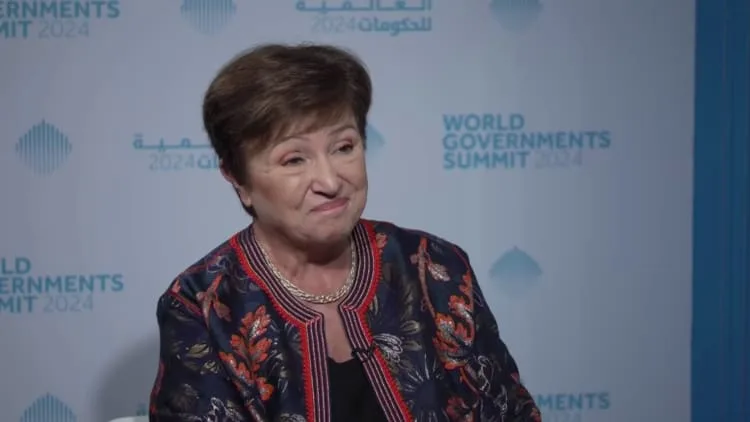
Kristalina Georgieva, the first woman to serve as Managing Director of the International Monetary Fund, has consistently warned about "fragmentation risks" in the global economy, advocating for international cooperation amidst diverging regional paths. (Source: cnbc.com)
Japan’s money policy is different. The Bank of Japan (BOJ) kept rates very low for longer. It began modest increases in late 2025. The goal was to escape decades of falling prices. The yen’s value against the dollar remains a worry. BOJ Governor Kazuo Ueda said in December 2025 that they are moving carefully.
High interest rates make government debt more expensive worldwide. Countries with large debt loads face significant budget stress. This limits their ability to fund public services. The Institute of International Finance (IIF) reported global debt over $310 trillion by Q3 2025. This debt affects developing economies most severely. It reduces their ability to invest in growth.
Geopolitics rewrites trade and investment rules
Global trade volumes should grow by 2.8% in 2026. This is less than before the pandemic. Political divisions heavily shape this trend. US-China trade tensions continue. They push efforts to “friend-shore” supply chains, meaning production moves to allied countries.
The World Trade Organization (WTO) described this shift in its October 2025 trade outlook. WTO Director-General Ngozi Okonjo-Iweala warned against protectionism. She warned that splitting economies costs a lot. Companies are spreading out their manufacturing bases. They prioritize security over efficiency. For example, semiconductor production is growing outside Taiwan.
Energy security is still a major worry. The ongoing conflict in Ukraine still affects natural gas markets. Europe keeps moving away from Russian energy. This means large spending on renewables and other suppliers. Energy prices, though down from their peaks, still fluctuate. Businesses face more uncertainty because of this.
Money flows reflect these political concerns. Foreign Direct Investment (FDI) became more focused. It targets specific groups of countries and important industries. A Goldman Sachs report in November 2025 pointed this out. It showed more FDI into North America and Southeast Asia. Investments in China slowed down. This shows a significant change in global money.
Emerging markets: some thrive, some struggle
Capital flows to emerging markets (EMs) hit $1.2 trillion in 2025. But that number hides sharp differences. Some EMs, especially in Southeast Asia and Latin America, attract significant investment. Stable politics and growing middle classes draw investors in. Vietnam and Mexico are good examples.
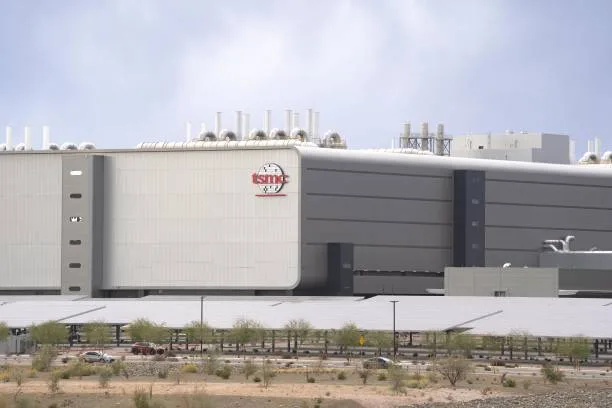
A gleaming, high-tech semiconductor fabrication plant, symbolizing the global shift in manufacturing as companies prioritize security over efficiency, moving production bases outside traditional hubs like Taiwan due to geopolitical tensions. (Source: gettyimages.com)
Other emerging economies struggle with foreign debt and falling currency values. Countries relying on commodity exports face wild price swings. Nations with large dollar debts suffer when the US dollar gets stronger. Argentina and Egypt, for instance, face severe budget pressures. Paying off their debts strains national budgets.
The International Finance Corporation (IFC), part of the World Bank Group, expects this split to continue. Its January 2026 report highlights the need for substantial changes. These changes involve better governance and easier business. Without them, money could quickly leave. Political instability also deters foreign money.
China’s economic slowdown also affects many EMs. Countries supplying raw materials to China see less demand. This hurts their export income. Brazil, for instance, must find new trade partners. It relies less on China for commodity demand. India, though, benefits from strong domestic demand. Its economy remains a bright spot.
Navigating the split economy
Targeted spending will be essential for leaders worldwide in 2026. Broad stimulus packages do not work as well in this divided world. Governments must pick specific sectors to support. They need to address regional differences.
International cooperation also faces new roadblocks. Political tensions make global efforts harder. The G20 Finance Ministers will meet in Brazil in October 2025. They will discuss global debt relief and trade rules. Agreeing on these issues remains difficult. Different national priorities emerge.
Central banks must communicate clearly. Their policies affect global money flows. Mistakes could spark financial chaos. A strong financial sector is still important. Regulators watch non-bank financial institutions closely. They want to prevent widespread risks.
The private sector is changing its plans. Companies are making supply chains stronger. They are spreading out their market exposure. Digital change remains a main driver. Businesses use AI and automation for efficiency. This helps them handle cost pressures.
Green tech innovation is speeding up. This creates new opportunities for growth. Economies that embrace this change will succeed. Those that lag risk falling further behind. The future requires quick thinking and vision from everyone.
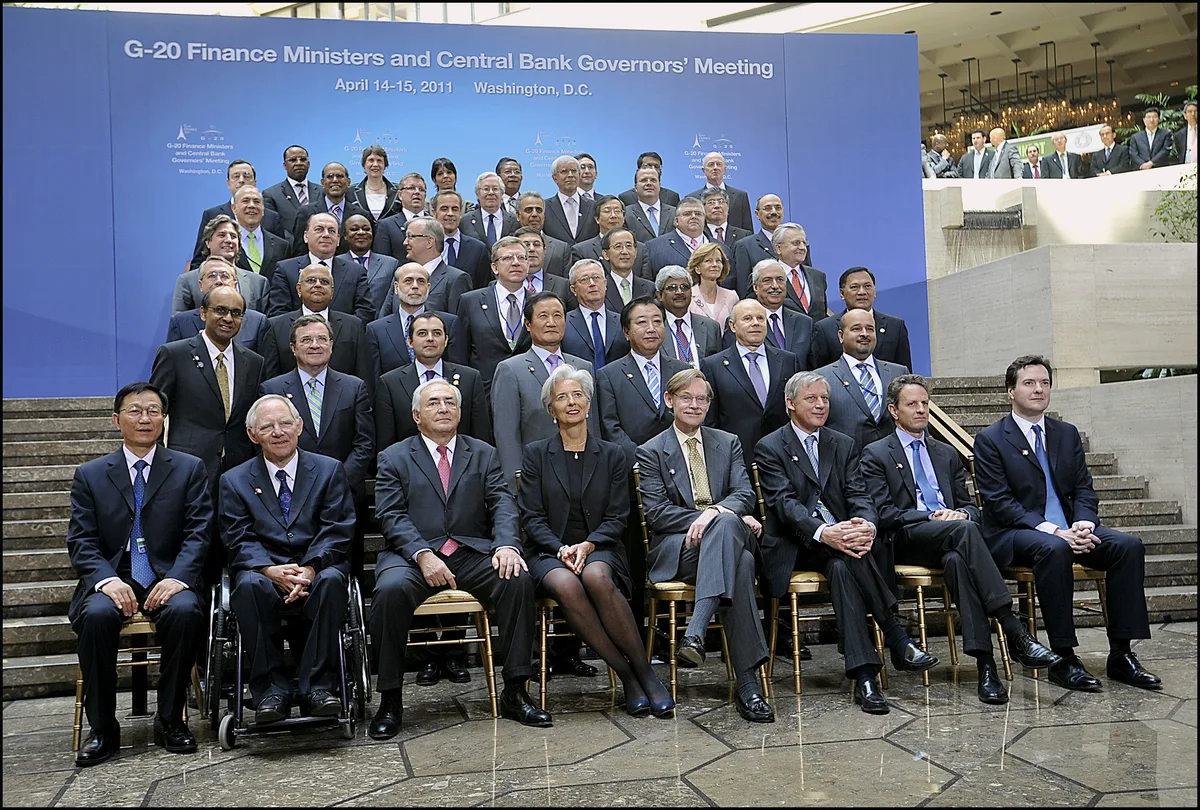
Finance ministers from the G20 nations convene to address pressing global economic challenges. The G20 Finance Ministers are scheduled to meet in Brazil in October 2025 to discuss global debt relief and trade rules amidst increasing political tensions and economic bifurcation.
Frequently asked questions
What does a “split” global economy mean for 2026? It means the global economy is going in different directions. Some regions grow fast, while others slow down. This split makes international policy difficult.
Which regions are doing better in this divided economy? The United States shows real strength. Parts of Southeast Asia and Latin America also draw strong investment. They benefit from specific economic strengths and stable policies.
How do interest rates cause this economic split? Aggressive interest rate hikes in some developed nations have curbed inflation. Other regions, like the Eurozone, still face price increases. This leads to different money policies and economic results.
What is “friend-shoring” and why does it matter for 2026? “Friend-shoring” means moving supply chains to allied countries. Political tensions fuel this trend. It puts security ahead of cheap costs in global trade and investment.

Friend-shoring, a significant trend shaping the 2026 global economy, involves relocating supply chains to politically allied nations. This strategy prioritizes security and geopolitical alignment over traditional cost efficiency, fundamentally reshaping international trade and investment flows. (Source: incodocs.com)
You might also like:
👉 US-China: $664B Trade Masks Zero-Sum Global Power Struggle
👉 Will Trump’s Trade War Tank 3.9% Unemployment?
👉 Top 2026 Leadership Skills: Future-Proof Your Success & Career